Pocket Perfection

Pocket Doors are perhaps some of my favorite architectural features. Originally, they were often used to separate double parlors which were prevalent in both Victorian and Greek Revival town homes throughout the 19th century. Built in 1832, the Greek Revival Merchant’s House on East 4th Street in New York, boasts beautiful double parlors separated by large mahogany pocket doors.

Pocket doors are still quite prevalent in architecture today, they are a nice feature when a homeowner is looking for an “open plan” and yet wants to be able to create privacy at times. As in the photo above, they also don’t have to be solid.
The doors allow for diverse spatial organization, which is so great.  In the summer, the doors can be kept open for a more airy feel, and then in the winter, close the doors and cozy up next to the fire. I love these doors in Katie Ukrop’s house in Richmond, VA, they are absolutely stunning. The many panes in the doors draw your eye across and through the living room to the the windows at the end.

Albeit chic, what I love about pocket doors is their practicality. Pocket doors do not get in the way, they never swing closed when the wind blows through your house or apartment, they don’t have to be propped open, and they take up no floor space.
In  my tiny fifth-floor walkup in NYC, I had pocket doors on both the bathroom and bedroom doors.  In such a tiny rabbit warren type space, pocket doors were great because they didn’t take up any of the all important space!  They are especially great for bathrooms–in my NYC space, had there not been a pocket door, the bathroom door would have swung outwards and hit the stove.  
Closets can also be another great opportunity to utilize pocket doors because of their space saving attributes! 
Although originally intended to separate gracious spaces, as in this living room/dining room by Ashley Whitaker from House Beautiful, pocket doors can be extremely useful when trying to design smaller, practical spaces. 

More Architecture

I Wish I had a …

Fireplace! Since I have just gotten back from Charleston, land of the amazing extant 18th and 19th century houses, I have been thinking about fireplaces–and more specifically, fireplace mantels. Unfortunately, I have neither. For those apartment dwellers and homeowners who are lucky enough to have a working fireplace to cozy up to during this recent drop in temperature–I envy you. And for those of you living in an apartment building or converted townhouse that has a mantelpiece as a reminder of what once was a working fireplace–I am equally jealous.
Canadian House and Home

Miles Redd

Southern Accents

Nick Olsen, Domino
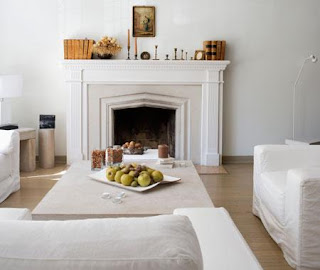
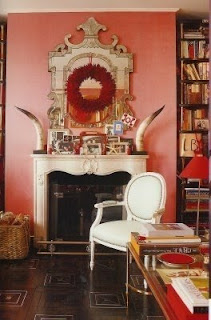
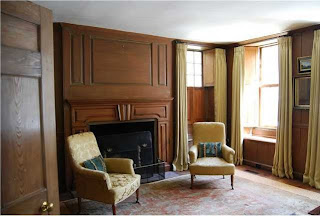
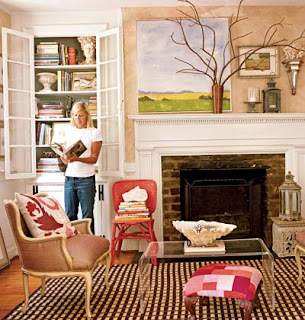
Working or non-working, a fireplace provides a great focal point for any room, and an opportunity to create a mantelscape. Books, candles, flowers, photos, objet and in Miles Redd’s case, horns, are all great for decorating a fireplace mantel. Some prefer allowing the architectural details of the mantelpiece stand alone, such as Nick Olsen above, and some Charlestonian mantels below.
75 King Street, carriageprop.com

90 Church Street, carriageprop.com

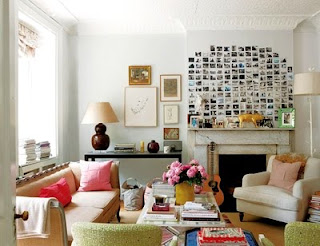
There are also non-traditional mantelscapes. Charlestonian and jewlery designer, Janet Gregg, did an off center mantelscape in her Stolls Alley cottage that plays off the rambling nature of her 18th century house. Rita Konig, our favorite Domino contributor, used her mantelpiece as an opportunity to display photos in an unconventional way.
Janet Gregg, Cottage Living

Rita Konig, Domino

Some prefer to stick with one single object above their mantel whether it is hanging or leaning a painting or a mirror–this option works too.

Darryl Carter, Elle Decor

Domino

The most important thing to remember is that it should be personal! Nate Berkus is currently selling “mantelscapes” on hsn.com. I think that part of the fun of decorating things like mantels and tables is using things that you already own to create a personalized vignette. Sure, there is definitely a popular formula, but don’t purchase a pre-packaged decorating scheme just so you can have a finished mantel. None of the items need to be expensive–as in Rita Konig’s apartment, she used printed photographs to create her mantelscape. And if you are using a single painting or mirror, that can also be cheap! I cannot wait until I have a mantel of my own to decorate–fire or no fire.

More Architecture

Gut fish, not houses.

“Because of its devotional, graceful attraction to food and gardens and architecture, Charleston stands for all the principles that make living well both a civic virtue and a standard … There is a tastefulness in its gentility that comes from the knowledge that Charleston is a permanent dimple in the understated skyline, while the rest of us are only visitors.”- Pat Conroy, South of Broad

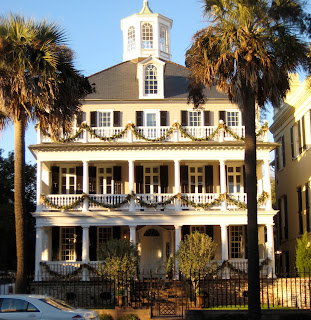
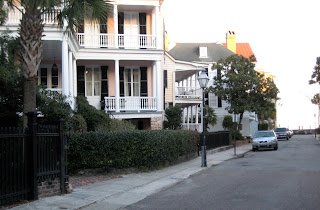
Although I am running the risk of sounding chliched, for those of you who haven’t been to Charleston, get on a plane. It is possibly one of the most beautiful cities in the United States.

It has an old south sensibility with an almost European aesthetic that makes it absolutely irresistible to out-of-towners. From the moment that I touched down in Charleston after WWB moved here, I have never looked back.

Obviously, for a preservationist, Charleston has its charms. However, for those of us who are aesthetically inclined, the city offers a respite from the unsightly structures that dominate our cities.

And yes, Charleston is a city. Although not the capital of South Carolina–Columbia is–Charleston offers a top tier college, a diverse art scene, beautiful architecture, and access to the Atlantic Ocean.

Charleston boasts architecture dating back to the 18th century, as evident on its High Battery, which overlooks Fort Sumter–the hallowed place where the Civil War began.

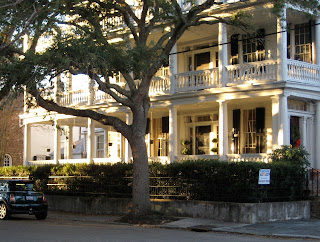
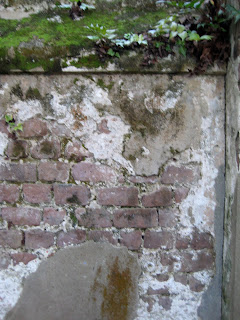
Some of my favorite things about Charleston are its walls. Built in the 17th Century, Charleston was once a walled city, built to protect itself from its unknown foes. Today, many homes’ original walls are still extant, and their patina adds to the exemplary architecture of the homes they protect.


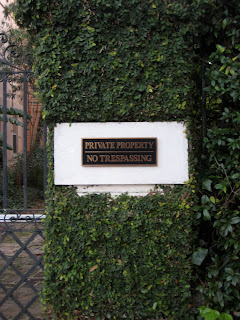
However, today, the walls are not to protect the homeowners from rioting slaves, but rather nosy tourists who ignore property lines in order to achieve the perfect picture.


Charleston was the first city in the country to enact an historic district zoning ordinance, which allowed a Board of Architectural Review to restrict and comment on any development, redevelopment, or addition within the historic districts of Charleston.

Many other cities followed suit, and historic preservation was born.

Clearly, there is an obvious reason why I love Charleston, however, there are many reasons why you could too! The food is amazing, the people are charming, the shopping is fabulous, and above all, the weather is perfect. Palmetto trees and crescent moons, what could be better?

More Architecture